


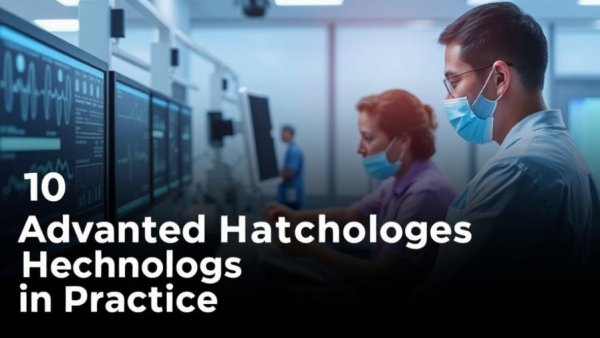
Redefining Healthcare: The Role of Technology in Patient Care
Over the years, the healthcare industry has been undergoing a monumental transformation, fueled by innovations that promise to redefine standard practices in ways that were once the stuff of science fiction. Advanced healthcare technologies are no longer abstract ideas; they are practical tools that forward-thinking healthcare professionals can use to enhance patient care, making the patient experience more personalized and effective.
Wearable Ultrasound: A Game Changer for Diagnosis
Imagine receiving real-time diagnostic information while on the go. The introduction of wearable ultrasound has made this a reality. The innovative design by Sonologi allows for continuous monitoring of patient health, especially cardiovascular conditions. Clinicians can now access imaging data as patients wear the device, fostering proactive and timely medical decisions. This shift towards AI in patient care represents a significant leap in how we perceive diagnostics, allowing healthcare providers to track health metrics around the clock.
Enhancing Safety and Efficiency with Exoskeleton Technology
As healthcare professionals often face physically daunting tasks, German Bionic's Apogee+ exoskeleton has emerged as an intelligent solution to help alleviate the workload. The technology assists staff in lifting patients and reduces fatigue, thus mitigating injury risks. This revolutionary system boosts operational efficiency by empowering healthcare workers to perform their duties with improved safety and strength. In an era of increasing staff shortages, such innovations pave the way for better patient-centered care.
The Power of Virtual Reality in Healing
Virtual Reality (VR) is breaking ground within healthcare settings, proving particularly beneficial in intensive care units (ICUs). With its ability to transport patients mentally away from the hospital environment, VR creates calming experiences that can ease the trauma of hospital stays. For instance, UF Health Shands Hospital has implemented virtual tours of serene landscapes, helping patients recover psychologically while dealing with physical ailments. Such practices echo the importance of enhancing the patient experience through innovative digital health tools.
Mixed Reality's Impact on Surgical Precision
Mixed Reality (MR) is gaining traction as a transformative tool in surgical environments. By allowing surgeons to overlay digital images onto their field of view during operations, MR enables more precise interventions. Applications developed by organizations like apoQlar facilitate the engagement of both medical staff and students, enriching educational processes and enhancing outcomes in complex surgeries. The infusion of such smart health technologies is a testament to the healthcare transformation we currently witness.
AI in Patient Care: Transforming Diagnostics and Engagement
The role of artificial intelligence in healthcare continues to expand ambitiously. AI-powered diagnostics are reshaping how conditions are detected and treated, fostering greater accuracy and speed. Furthermore, predictive analytics in healthcare empowers professionals to anticipate patient needs, facilitating proactive care that aligns with personalized medicine principles. As healthcare shifts from reactive to proactive strategies, the integration of AI not only enhances outcomes but also improves patient engagement.
The Future is Here: Embracing Advanced Technologies
With the rapid evolution of healthcare technologies, professionals must remain informed about emerging tools that can enhance their practices. The integration of AI-driven patient care solutions, smart health technologies, and digital health tools is not merely a trend; it is the future of healthcare. As we explore the challenges and opportunities that lie ahead, being equipped with knowledge on these innovative tools will be essential for professionals aiming to deliver quality patient care.
For healthcare professionals eager to stay ahead in this transforming landscape, it’s crucial to embrace the advancements shaping our industry today. Get involved, seek out training opportunities, and engage with these technologies to better serve your patients.











Write A Comment